




![[eBook] Sustainability and water management](https://agriplasticscommunity.com/wp-content/uploads/8_550x310_ENG-440x264.png)
![[eBook Trends in Agriculture Plastics] Increasing use of biodegradable mulch](https://agriplasticscommunity.com/wp-content/uploads/550 × 310_2_ENG-150x150.png)
![[eBook Trends in Agriculture Plastics] Reducing the plastic used in the manufacture of agricultural films](https://agriplasticscommunity.com/wp-content/uploads/550 × 310_1_ENG-150x150.png)









Why is the plastic covering of side walls of the silage bunker so important?
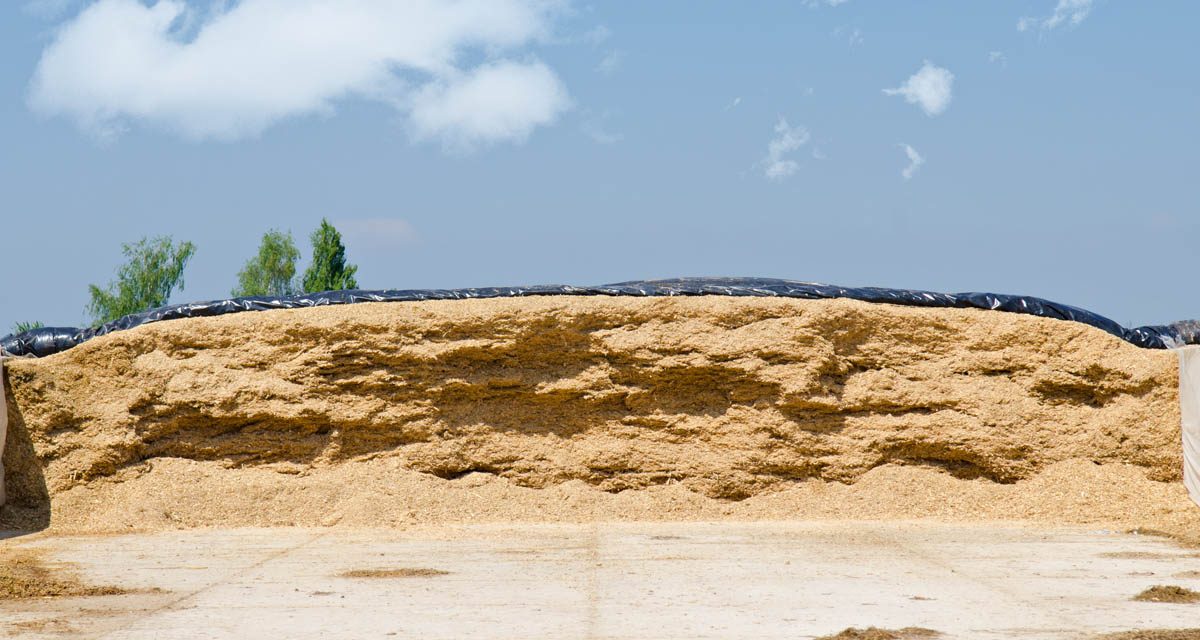
If you manage a bunker silo, there’s a pattern that repeats itself time and again: the worst silage is rarely found in the center. It’s usually found at the edges, in the corners, on the shoulders and along the walls.
To support the arguments presented in this article, we draw on insights from three PhDs specializing in nutrition and silage. The first is Dr. Megan Smith, Global Silage & Hay Expert; Dr. Rafael Amaral, a renowned professional and zootechnician with a master’s and doctorate in Animal Sciences and over 20 years of experience and Dr. Renato Schmidt, a specialist in forage products.
Dr. Megan Smith puts it clearly: the interface between the silage and the bunker wall is one of the most vulnerable areas in the entire system. These are areas that are difficult to compact properly, tending toward lower density and greater porosity, and therefore become the easiest route for oxygen to enter.
And when oxygen enters… quality declines.
The walls of a silage pit are high-risk áreas
The sides and shoulders of a silage bunker have structural disadvantages:
- less uniform compaction;
- greater porosity;
- microchannels through which air can flow.
Dr. Smith explains that without side plastic, a pathway is created for: oxygen infiltration, sustained aerobic activity, yeast and mold growth, loss of fermentation stability and accelerated dry matter (DM) losses.
Simply put: lower density + higher porosity = greater exposure to oxygen.
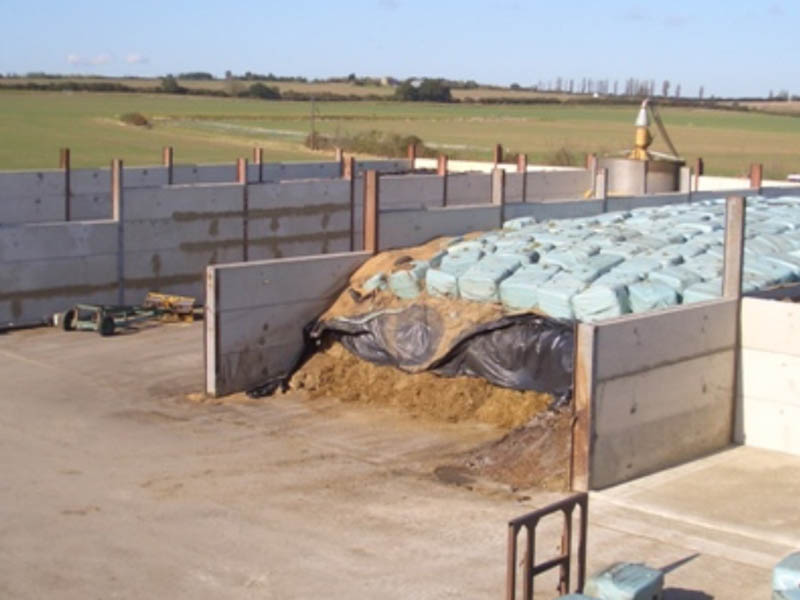
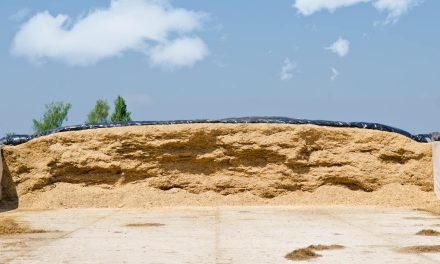
Silage bunker with vertical walls
Oxygen is the trigger (not “just mold”)
In the interview with Dr. Rafael Amaral, also known as Doctor Silage, conducted by Melissa Mayoral, export manager for the Brazilian market at Armando Alvarez Group, the message was the same: oxygen and silage don’t mix. Oxygen breaks the principle of preservation by triggering aerobic spoilage and with it, losses.
This matters because “mold” is usually what’s visible, but it’s rarely the only factor. In response to a question about typical losses in an unlined silo, Dr. Megan Smith cited previous research indicating that losses could reach up to 20% of dry matter in silos that aren’t properly lined. And she adds a key point: it wouldn’t be just due to mold, but also to other spoilage organisms, poor fermentation, and overall nutrient loss, depending heavily on management practices.
In summary: oxygen is the root cause of mold and the walls are usually where it “wins” …
Hot Spots: what your thermometer is telling you
Dr. Smith notes that oxygen in the walls often causes elevated temperatures and secondary heating during feeding, creating “hot spots” where:
- nutrients are lost through respiration,
- palatability decreases (the animal finds it less appetizing)
- there is lower feed intake and reduced animal performance.
In this case, as Dr. Schmidt explains, microbial inoculants can help improve fermentation (lowering pH more quickly, reducing undesirable fermentation) and/or improve aerobic stability during feeding (controlling yeast, reducing heating), depending on the type of inoculant.
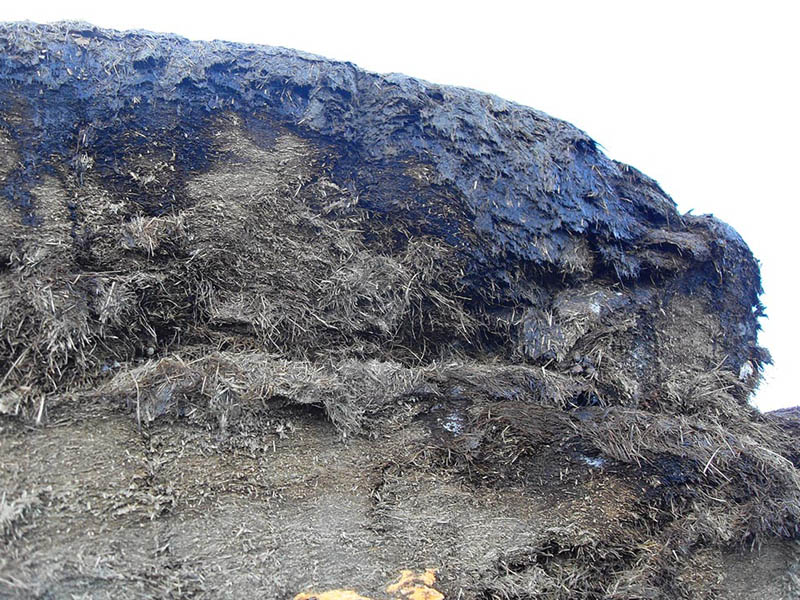
Silage without plastic covering
The plastic covering the side walls provides more protection than the quality of the silage
An often-overlooked point: proper protection of the silage clamp is key.
Fermentation produces organic acids. Without side plastic, these acids can come into direct contact with the concrete, eventually causing chemical degradation, surface erosion, and higher maintenance costs.
That is why covering the side walls of the silage bunker is not just an “aesthetic extra”: it is risk management for both feed and infrastructure.
The annual costs of protecting the side wall with plastic, which is very effective are far lower than the long term costs of replacing or remodelling the side walls of the bunkers due to the low pH erosion of the concrete.
Where do inoculants fit in (and where do they NOT)?
Here’s the key shift in thinking:
- Side plastic + seal (and oxygen-barrier film) = control of oxygen ingress
- Inoculants = control over which microbes dominate fermentation and/or aerobic stability
You need both, but they solve different problems.
Fermentation is a war (and microbes do the work)
In the webinar presented by Dr. Schmidt, fermentation is described as a “war” between “good” (lactic acid bacteria) and “bad” (yeasts and molds, enterobacteria, clostridia). The outcome depends on which species become dominant.
But this same seminar highlights a key point: the presence of air in the forage mass is a primary factor that negatively affects the process. That’s why the side plastic is so important: if oxygen enters continuously through the walls and shoulders, you’re giving the “bad guys” a constant advantage, no matter what inoculant you use.
Inoculants DO NOT replace proper management
This deserves to be highlighted:
“Inoculants do not replace proper silage management”
Practical translation: if the silage isn’t covered with plastic, compaction on the sides is poor, the surface is uneven, or the cover loses its airtightness, inoculants help… but they cannot “cancel out” the continuous influx of oxygen.
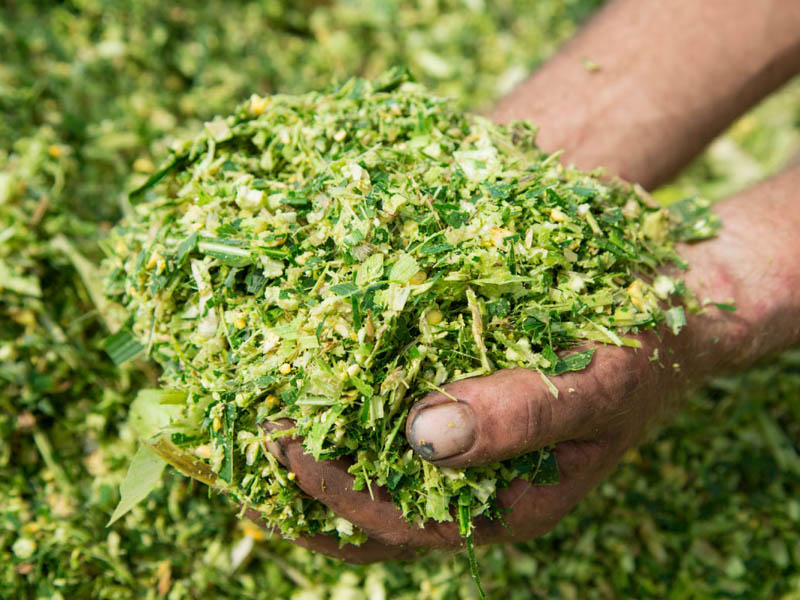
Corn silage
Two objectives of inoculants: “front-end” vs. “back-end”
In the webinar, Dr. Schmidt distinguishes between two main uses:
- Fermentation stimulators (front-end):
Rapidly lower pH, minimize plant respiration, and prevent poor fermentation, maximizing nutrient retention (better recovery of DM, protein, and energy).
- Aerobic stability enhancers (back-end):
Because a low pH alone does not inhibit yeast growth and yeasts can use lactic acid as a substrate and initiate aerobic spoilage.
In fact, it is emphasized that something is needed to slow yeast growth, which is responsible for >99% of heating events.
This connects directly to the walls: the edges and shoulders are often where “back-end” issues first arise.
The value of aerobic stability inoculants in the supply chain
The webinar explains that certain hetero-fermentative bacteria produce acetic acid, which controls wild yeasts and enhance aerobic stability. It also highlights the role of L. buchneri 40788 in extending shelf life, reducing dry matter losses, maintaining stability and hygiene.
The practical takeaway:
- if your system is vulnerable at the edges (most are), the aerobic stability strategy matters;
- but it works much better when you reduce oxygen ingress by lining the side walls with plastic + using high-quality sealing (oxygen barrier films).
Inoculant management: you can’t benefit from what you “kill”
It cannot be stressed enough that inoculants are living organisms and must be managed properly: follow the manufacturer’s instructions, clean/sanitize/calibrate applicators, apply evenly, protect from heat, sunlight and moisture.
If you’re going to inoculate, treat it with the same seriousness as compaction.
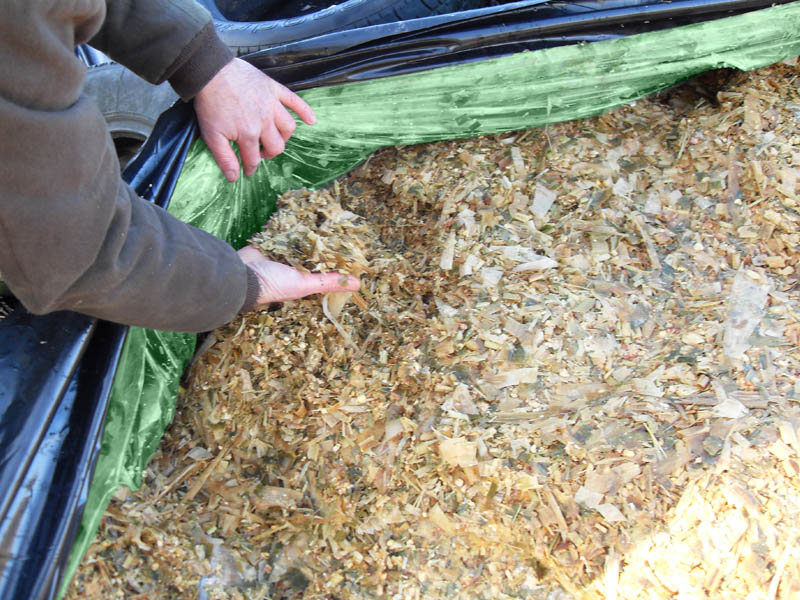
Oxygen barrier film
The technical point about film: standard plastics also allow oxygen to pass through
Dr. Rafael Amaral, also known as Doctor Silage in Brazil, shares a fact that many underestimate: even good-quality standard films can be permeable.
In his thesis, a conventional double-sided film allowed about 1 liter of O₂ per m² per day to pass through at 23°C.
In contrast, barrier films with low-permeability polymers such as EVOH (ethylene vinyl alcohol) can drastically reduce oxygen transfer (from around 1 liter to ~10 ml), and that’s where “the magic happens”: less oxygen → less spoilage.
This applies perfectly to walls:
- there is already a higher risk due to compaction;
- if the covering system allows for greater oxygen transfer, the risk multiplies.
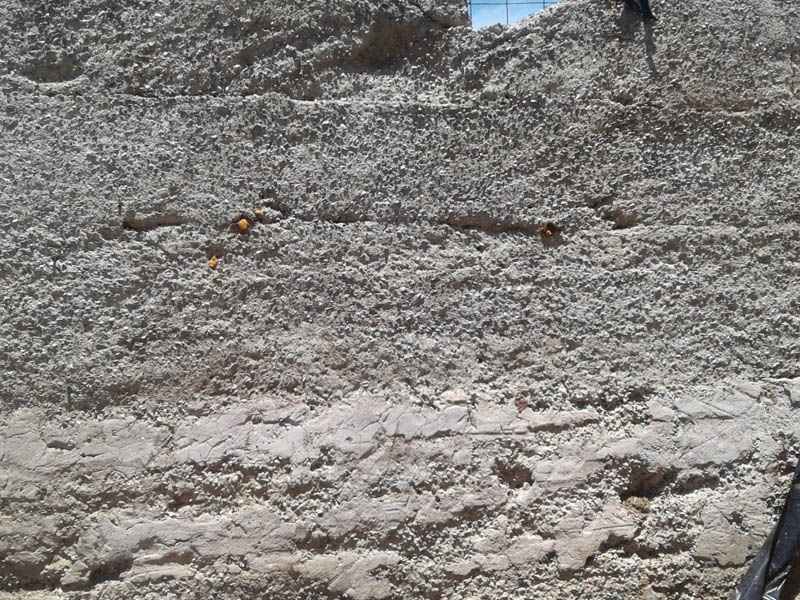
Erosion of the silage wall
Conclusion: A practical approach to reducing losses in bunker silo side walls
Dr. Smith puts it bluntly: the plastic lining on the side walls is not an “extra”. If you don’t protect these walls, you won’t fully control oxygen levels, you’ll accept a higher risk of spoilage and you’ll compromise the quality of the feed and the bunker’s shelf life.
One approach would be:
- Compact to maintain density, especially at the shoulders and sides
- Side lining to block oxygen pathways and protect the concrete
- High-quality sealing (use oxygen-barrier films) to reduce O₂ transfer
- Risk-aligned inoculant strategy:
- Front-end for fermentation control (high moisture, clostridial risk, etc.)
- Back-end for aerobic stability during feedout (yeast control)
- Proper application of the inoculant (calibration, cleanliness, uniformity; do not kill the microbes)
- Feedout discipline (surface management + heat control)

![[eBook] Increased use of oxygen barrier films](https://agriplasticscommunity.com/wp-content/uploads/ebook6-550x310_ENG-440x264.png)