

![[eBook] Sustainability and water management](https://agriplasticscommunity.com/wp-content/uploads/8_550x310_ENG-440x264.png)
![[eBook Trends in Agriculture Plastics] Increasing use of biodegradable mulch](https://agriplasticscommunity.com/wp-content/uploads/550 × 310_2_ENG-150x150.png)
![[eBook Trends in Agriculture Plastics] Reducing the plastic used in the manufacture of agricultural films](https://agriplasticscommunity.com/wp-content/uploads/550 × 310_1_ENG-150x150.png)





SCRAP (Collective Systems for Collection of Agricultural Plastics): Walking together towards circular and sustainable agriculture
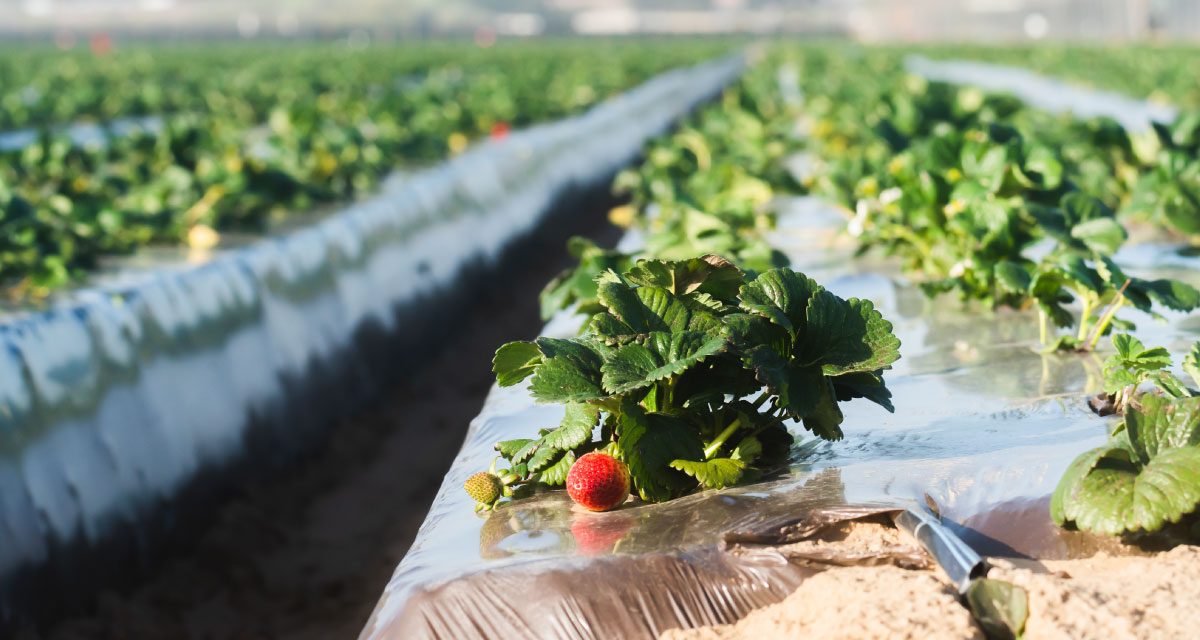
Agricultural plastics have been a crucial tool for improving productivity in the field (cover films, silage films, mulch films, baling twine, crop support twine…), but managing their waste poses an increasingly significant environmental and economic challenge. In this regard, SCRAPs (Collective Systems for Collection of Agricultural Plastics) seek to ensure and accelerate the transition to more sustainable agriculture.
According to the FAO, an estimated 12.5 million tons of plastics are used each year in plant and animal production, mainly in the agricultural and livestock sectors. Therefore, solutions must be cross-sectoral, inclusive, and aligned with the principles of the circular economy to make agri-food systems more sustainable and resilient.
In this article, you will learn what an SCRAP is specifically for agricultural plastics, how it works, examples of international models, the current situation in Spain, and the challenges and benefits it brings to producers.
Context: Why talk about SCRAP in agriculture (not packaging)?
The implementation of Extended Producer Responsibility Collective Systems (SCRAP) in agriculture is essential to comply with Law 7/2022, which establishes the mandatory deployment of EPR schemes for non-packaging agricultural plastics, differentiated from the packaging sector regulated by RD 1055/2022.
This legal framework transfers responsibility to producers to finance and organize end-of-life management, thus promoting sustainable and efficient management of agricultural plastic waste.
The shared responsibility approach emphasizes that only through collaboration between manufacturers, distributors, and farmers can the plastic cycle be closed and environmental impact reduced.
What is an agricultural plastic SCRAP and how does it work?
An agricultural plastic SCRAP is a collective non-profit organization funded by producers that is responsible for planning, contracting, and auditing the collection and recycling of agricultural plastics. At the operational level, they function as logistical and financial platforms.
These systems support farmers through a network of return points and awareness campaigns, facilitating the proper management of plastic waste in the field.
The basic operation of SCRAP involves the registration of the producer, who contributes eco-taxes to finance the system.
The network manages collection points with specific delivery criteria, such as cleaning and segregation of plastics. The traceability of the waste is guaranteed for reporting and verifying results.
In Europe, similar systems have achieved very high recycling rates. For example, in 2023, Germany’s Agricultural Plastic Recovery and Recycling System, ERDE, managed to recycle more than 71.7% of the plastics it received, demonstrating the real potential of SCRAPs to move towards a circular economy in the field.
Models that already work (international benchmarks)
There are several established international SCRAP models for agricultural plastics that serve as benchmarks, which have been progressively implemented in several European countries and Canada.
- ADIVALOR: in France, ADIVALOR is a sectoral organization with precise guidelines for waste preparation and an efficient national collection network. More info.
- Cleanfarms: in Canada, Cleanfarms operates nationally with a comprehensive strategy towards “zero plastic waste” in agriculture, supported by a clear roadmap and pilot recycling programs. More info.
- ERDE: in Germany, ERDE has thousands of fixed and mobile collection points. In 2023, it collected 35.5 tons of agricultural film, achieving a net recycling rate of over 70% of the material placed on the market. More info.
- Rigk: Based in Switzerland, it operates an efficient collection system for agricultural plastics that integrates fixed and mobile collection points, optimizing logistics and the traceability of recycled material. More info.
- Sigfito: Sigfito in Spain represents a collective system focused on the comprehensive management of agricultural waste, including plastics and other materials, with a special emphasis on collaboration with farmers and distributors to close the waste cycle. More info.
These models demonstrate the viability and effectiveness of SCRAPs, as well as providing operational examples and clear goals for advancing circular management of agricultural plastics.
Situation in Spain: towards full deployment
In Spain, Law 7/2022 establishes extended producer responsibility (EPR) for non-packaging agricultural plastics, promoting the creation of schemes that several autonomous communities are already implementing to comply with this legal obligation.
This law represents a significant step forward towards sustainable management of agricultural plastic waste, in line with the waste hierarchy and circular economy objectives established by the European Union (BOE, 2022).
Within this framework, MAPLA emerges as the main sectoral initiative to coordinate this effort at the national level, acting as a collective system that facilitates the collection, recycling, and proper management of agricultural plastics (Retema, 2024).
Its deployment seeks to prevent polluting dumping and improve traceability in the agricultural value chain.
Benefits of SCRAP (Collective Extended Producer Responsibility System)
Tangible benefits of SCRAP
SCRAPs for agricultural plastics have been shown to significantly increase collection and recycling rates. This increase is accompanied by a reduction in total costs for farmers, thanks to the economies of scale provided by the collective system compared to individualized solutions.
In addition, SCRAPs ensure complete traceability of collected waste, facilitating regulatory compliance and reliable reporting of results.
This data management allows for the identification of opportunities for continuous improvement and the adjustment of collection campaigns to maximize the efficiency and sustainability of the process.
Technical challenges that SCRAP helps to solve
SCRAPs face significant technical challenges, such as the contamination of agricultural films with 30-80% soil and biomass (the latter data refers to the recycling of agricultural plastics, specifically mulch plastics, in the United States), which makes recovery difficult and requires strict delivery and pre-cleaning criteria to ensure the quality of the recyclable material (Maximum Academic Press, 2025). This could be solved by using biodegradable mulch.
In addition, the geographical dispersion of waste makes it necessary to combine fixed collection points with mobile campaigns to ensure effective coverage.
There are also regulatory challenges due to the coexistence of diverse regional regulations, as well as problems of lack of awareness among some farmers and unfair competition from producers who fail to comply with their EPR obligations.
Consolidated systems overcome these obstacles through digital tools for traceability, economic incentives, and partnerships with cooperatives and agricultural associations, which encourage active participation and shared responsibility.
These strategies have been shown to increase efficiency and collection, promoting the circular economy in the agricultural sector (Kunststoffverpackungen, 2025).
Roles and responsibilities (shared responsibility)
In an agricultural plastic SCRAP, each actor within the system has its own responsibilities according to its role (BOE, 2022).
- Producers/importers: producers and importers assume responsibility for financing the system, promoting eco-design, and providing clear information to the market to minimize environmental impact.
- Distributors: distributors act as a return channel, facilitating local collection and communication with farmers.
- Farmers: farmers must segregate, perform basic cleaning, and deliver plastics to established points and dates to ensure the quality of the material.
- Managers: managers are responsible for logistics, sorting, and recycling, ensuring traceability and regulatory compliance.
- Administration: the administration supervises through authorizations, sets objectives, and controls the system to ensure its effectiveness and transparency.
What should a good SCRAP offer farmers?
A good SCRAP should offer farmers an extensive and accessible network of collection points and regular campaigns to facilitate the delivery of agricultural plastics.
It is essential that it provides clear delivery criteria, such as waste cleanliness and proper segregation by plastic type, to optimize recycling.
In addition, prices or fees must be predictable and transparent, and the system must issue easy-to-use certificates and reports that allow farmers to verify their contribution to regulatory compliance and sustainability (Rigk, 2024).
We invite you to read more about SCRAPs in the 5th edition of the Armando Alvarez Group’s RojoAzul magazine, 2025.
Conclusion: Towards sustainable and resilient agriculture, a commitment from everyone
Sustainability in agriculture is an achievable goal thanks, among other initiatives, to SCRAPs. These systems enable the efficient management of agricultural plastic waste, reducing its environmental impact and promoting the circular economy.
Adopting responsible practices and supporting collective systems is vital to protect our soils, ensure the health of future generations, and improve the profitability of the sector.
Today more than ever, collaboration between producers, distributors, managers, and administrations is key to transforming the countryside into a cleaner, more productive, and more sustainable space.
Actively participating in SCRAPs and complying with regulations means contributing to building a responsible and resilient agricultural future.
Sources consulted:
ADIVALOR. (2024). Institutional presentation. https://www.adivalor.fr/docs/sharedoc/157/cominst83-6-pages-institutionnel-anglais.pdf
BOE. (2022). Law 7/2022, of April 8, on waste and contaminated soil. https://www.boe.es/buscar/act.php?id=BOE-A-2022-5809
Cleanfarms. (2021). Project to create a Canadian zero plastic waste strategy for agriculture. https://cleanfarms.ca/wp-content/uploads/2021/08/Project-Building-a-Canada-Wide-Zero-Plastic-Waste-Strategy-for-Agriculture.pdf
ERDE Recycling. (2024, June). Impressive results for 2023: the ERDE initiative presents remarkable figures for agricultural plastic recycling. https://www.erde-recycling.de/en/erde-news/impressive-results-for-2023-initiative-erde-reports-remarkable-figures-in-agricultural-plastics-recycling/
Food and Agriculture Organization of the United Nations (FAO). (2021). Agricultural plastics: A vision for sustainability. FAO. https://openknowledge.fao.org/server/api/core/bitstreams/450959c8-611a-4e25-99cc-88e88d4d1a9d/content
Armando Alvarez Group. (2025). RojoAzul #5. https://armandoalvarez.com/revista-rojoazul-5/en/
Maximum Academic Press. (2025). Recycling agricultural plastic films: challenges and logistics. https://www.maxapress.com/article/doi/10.48130/cas-0024-0003
Industrievereinigung Kunststoffverpackungen e.V. (2025). Position paper Circular Economy 2025. https://kunststoffverpackungen.de/wp-content/uploads/2025/06/ERDE-Positionspapier-Circular-Economy-2025.pdf
Retema. (2024). MAPLA, a new collective system for agricultural plastics, is born. https://www.retema.es/actualidad/nace-mapla-nuevo-sistema-colectivo-organizara-gestion-residuos-plasticos-agrarios
Rigk. (2024). Crop plastics recycling Germany – ERDE Recycling. https://www.rigk.de/en/recovery-systems/recovery-systems-for-producer-and-packaging-companies/detail/crop-plastics-recycling-germany-erde-recycling
Rigk. (2025). Sustainability in Agricultural Plastics Collection. https://rigk.de/en
Sigfito. (2025). Agricultural waste management in Spain. https://sigfito.es