

![[eBook] Sustainability and water management](https://agriplasticscommunity.com/wp-content/uploads/8_550x310_ENG-440x264.png)
![[eBook Trends in Agriculture Plastics] Increasing use of biodegradable mulch](https://agriplasticscommunity.com/wp-content/uploads/550 × 310_2_ENG-150x150.png)
![[eBook Trends in Agriculture Plastics] Reducing the plastic used in the manufacture of agricultural films](https://agriplasticscommunity.com/wp-content/uploads/550 × 310_1_ENG-150x150.png)






How Farmers Business Network Implements Artificial Intelligence and Attracts Investments to Develop Agribusiness
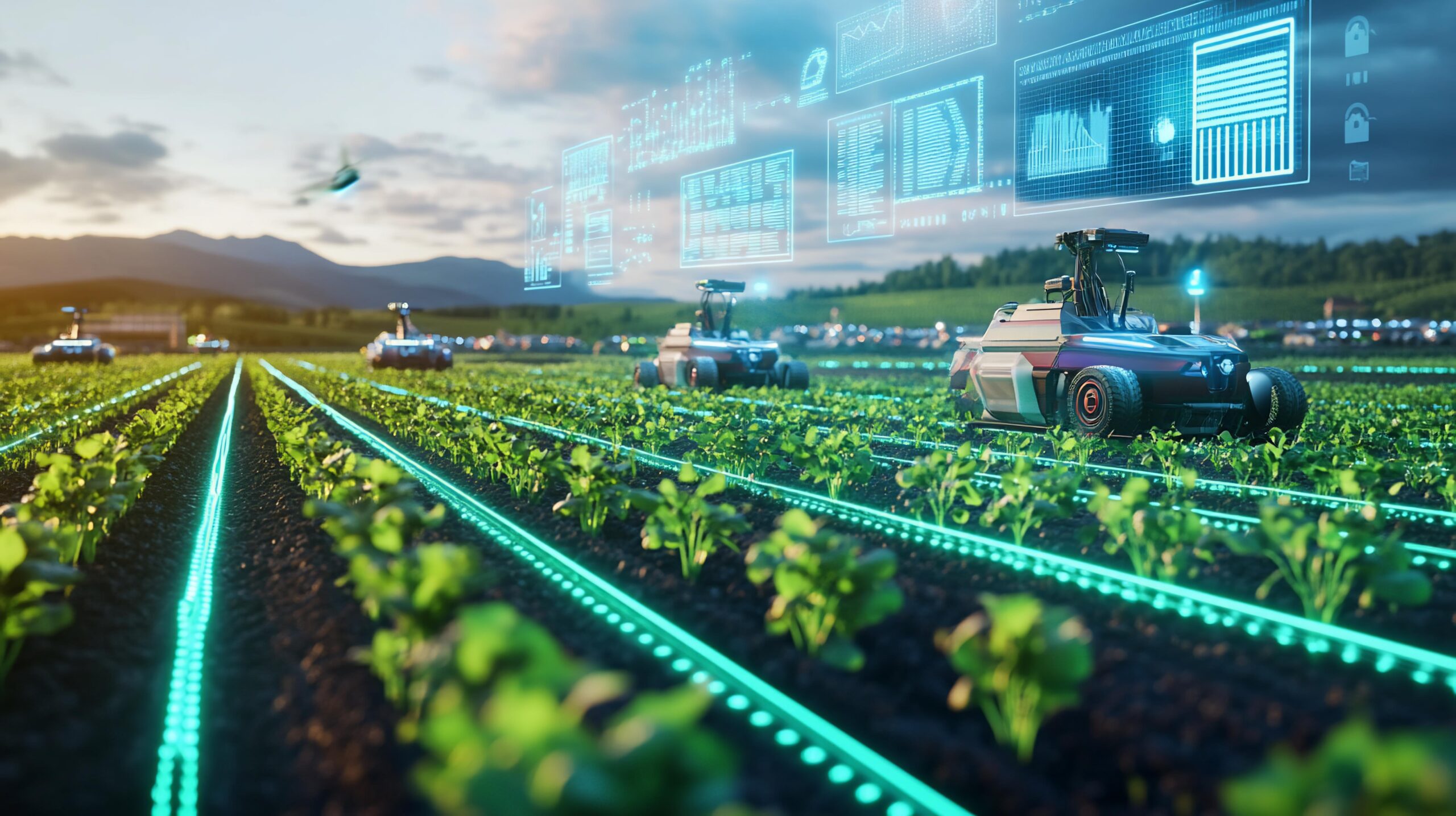
In recent months, Farmers Business Network (FBN) has once again come into the spotlight of the global agribusiness industry thanks to attracting $50 million in investments to accelerate digital transformation. This funding is aimed at expanding its product portfolio, developing artificial intelligence (AI), and improving its platform for farmers worldwide. The key question is: how is AI transforming farmers’ lives and contributing to the growth of the agricultural sector in the U.S. and beyond?
New Investments and Development Plans
The latest investment round has allowed FBN to focus on strategic priorities such as expanding its product range, implementing AI, and actively attracting new users. According to the company’s CEO, Diego Casanello, the platform has shown steady growth in its user base—around 40–50% annually (company data). This performance is achieved through continuously reducing customer acquisition costs and developing e-commerce services for agricultural producers.
The new funding will not only increase the number of FBN’s proprietary products but also open the platform to third-party sellers. This creates favorable conditions for the emergence of new innovative products and for supply chain optimization for farmers. Such an approach helps make FBN’s offerings as diverse and appealing as possible to both small and large farms.
The Role of Artificial Intelligence in Agribusiness
AI is becoming an integral tool in the digitalization of agriculture. In an industry where data are often fragmented, unstructured, and stored in different formats, the ability of AI systems to quickly analyze information and generate actionable recommendations becomes fundamentally important. The use of analytical algorithms allows the development of personalized services, automation of routine operations, and significant reduction of operational costs.
FBN possesses one of the largest databases on farming operations, giving it a competitive advantage in developing and deploying new digital solutions. CEO Casanello emphasizes that the intelligent integration of AI opens new opportunities for service personalization and enables the creation of multilingual interfaces for the global market. This is crucial for countries with different languages and cultural contexts, where access to information plays a key role in improving agribusiness efficiency.
Platform Development and the Launch of Norm
One of FBN’s latest innovations is the launch of an AI-powered advisor named Norm—a specialized service that provides users with agronomic consulting. Today, Norm can already answer a wide range of agrotechnical questions, and the team is actively training the neural network in new areas. In the near future, the advisor’s capabilities are expected to expand to include consultations on grain marketing, sustainable development, financial instruments, market analysis, and even the creation of personalized farm management strategies.
By expanding AI functionality, FBN is making its platform truly intelligent. Users gain access to up-to-date data, practical recommendations, and convenient decision-making tools. The implementation of digital advisors optimizes interaction between farmers and the service, reducing both time and financial costs associated with information search.
Key Achievements Over the Past Year
Over the past year, the company has achieved impressive results, supported by concrete figures:
- The number of clients has surpassed 117,000 farming enterprises (FBN internal statistics).
- The marketplace offers more than 7,000 product items, ranging from seeds to livestock supplies.
- Modern financial instruments have been introduced, including loans and sustainable financing, which facilitate farmers’ access to capital.
- In collaboration with ADM and representatives of the biofuel industry, programs based on satellite data were implemented to reduce the carbon footprint, resulting in over $30 million paid out in rewards for participation in green initiatives.
Opening the Platform to Partners
For a long time, the company focused on its own products, but today’s realities require flexibility. Opening the marketplace to third-party suppliers has become a logical step. This approach not only accelerates the introduction of modern biotechnologies and crop protection products but also lowers the costs of bringing new goods to market. FBN is creating infrastructure for the rapid launch of innovations, helping not only large companies but also small developers to offer their solutions to a wider audience.
The cooperation model is built on partnership: the company provides access to its customer base, while partners expand the assortment and stimulate competition. This approach gives farmers more choice and improves the overall quality of services provided.
Overcoming Market Challenges
The past few years have been challenging for the agrotechnology sector. Investors have become more cautious, the number of new startups has noticeably decreased, and economic instability has complicated long-term planning. FBN has managed to strengthen its position by focusing on profitability, technological efficiency, and the loyalty of investors who have supported the company for many years (according to CEO Casanello’s estimates).
A focus on strong partnerships, cost optimization, and the implementation of advanced technologies has enabled FBN to weather market turbulence. The management is confident that in the near future, companies that have gone through this period successfully will become the industry leaders.
Explanations and Extended Context
FBN was founded in 2014 as a digital network for knowledge sharing and collective purchasing. Today, it is considered one of the most innovative models in agribusiness, combining the functions of a marketplace, a financial service, and an agri-data collection platform. The principle of unit economics lies in reducing service costs per client by optimizing internal processes. Personalization refers to creating tailored offers based on farm data, while sustainable financing implies providing loans that meet environmental standards.
Similar digitalization processes are occurring in other industries as well—such as fintech and online retail—where artificial intelligence is actively used for data analysis, demand forecasting, and process automation.
This trend has also reached the iGaming sector, where AI helps create personalized offers, dynamically adapt scenarios, and enhance player engagement. A vivid example is the innovative game Aviatrix, which combines blockchain elements and gamification, offering a fast gameplay cycle and instant results. More information about this game and its features can be found on the site, which gathers descriptions of platforms supporting Aviatrix and examples of successful integrations. This example clearly illustrates how artificial intelligence can unify technologies and entertainment formats within a single ecosystem approach.
Real-World Cases and Rhetorical Questions
Farmers connected to FBN are already sharing stories of using Norm: some have received recommendations on crop protection against pests, while others have obtained advice on optimizing seed expenses. The use of AI-powered services helps not only save resources but also respond faster to market changes. Can artificial intelligence become the key to reducing operational costs for agricultural enterprises? What barriers still need to be overcome for the mass adoption of such solutions? These questions become increasingly relevant amid global AgTech trends.